ServicesConstruction Debris
Construction Debris Removal in University of California-Davis
Once the remodel wraps up, the tear-out tends to linger in the driveway. We carry it off, load the truck and leave the ground swept clean. You see the scope and price on paper first, with the materials listed and the factors that set the cost.
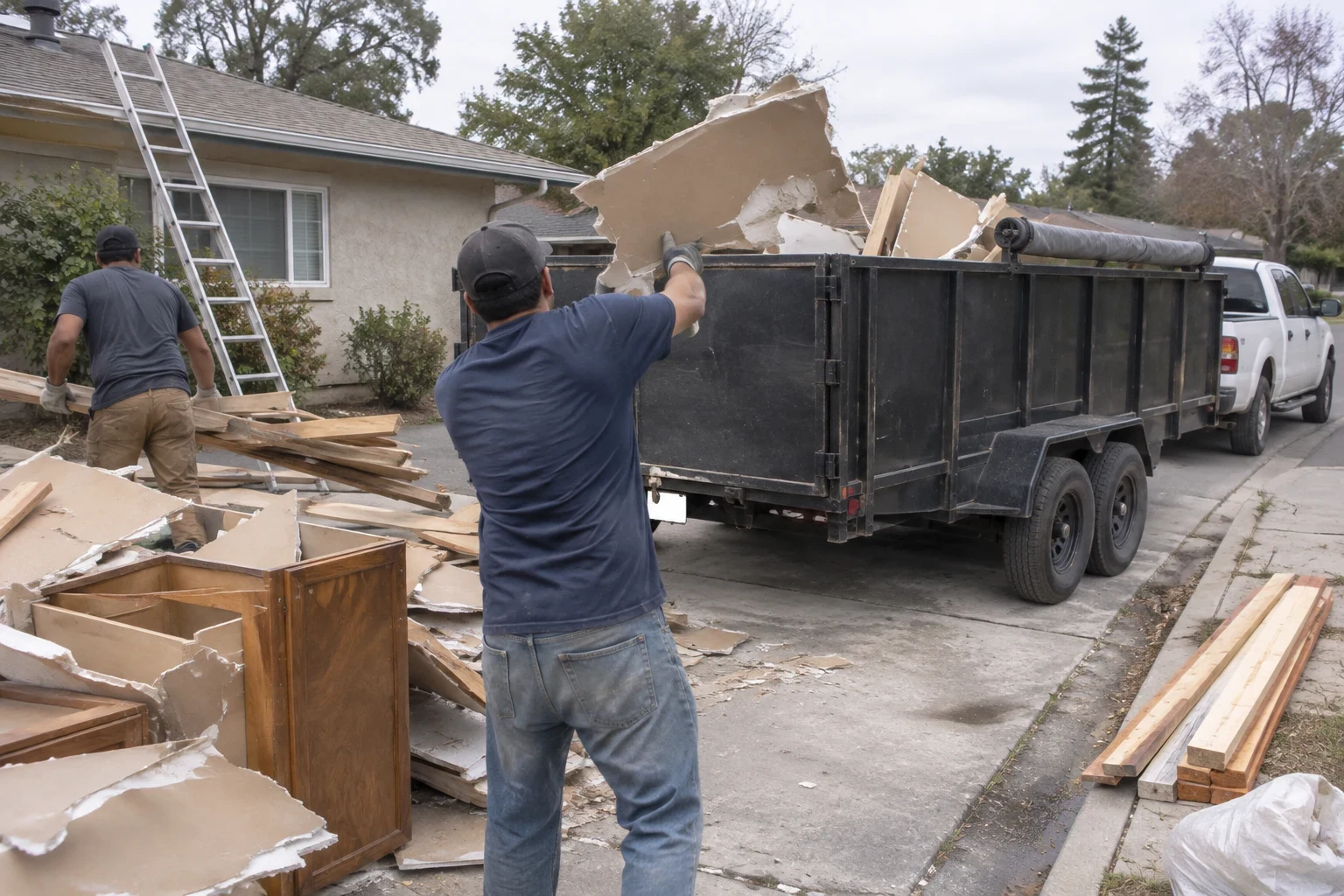
Clearing what a project leaves behind
Construction debris is the heavy, awkward material a renovation produces: torn-out drywall, offcut lumber studded with nails, old vanities, tile and mortar, carpet and pad, broken concrete. Plenty of contractors price the work without the cleanup. A roll-off bin is one answer, but it can tie up your driveway for days and leave marks on the surface. We come to your home, carry everything out and leave the area swept.
Debris varies a great deal in weight and type, so we look before we price. Your written quote names the materials, the rough volume and anything that affects disposal, and the figure you agree to is the figure you pay. If something unexpected turns up while we load, we pause and talk it through with you before anything changes.
What the work includes
- Pickup wherever the pile is
- The material can stay in the garage, along the side of the house, on the driveway or in the room you just finished. There is no need to move it to the curb before we arrive.
- Heavy and dense materials
- Broken concrete, tile, brick, plaster and roofing scraps are slow to load and heavy on the scale. We bring the right containers and carts so they come out without gouging floors or lawns.
- Sorting for recycling where possible
- Clean metal, concrete and cardboard can often go to recycling facilities instead of landfill. We keep them apart on the truck when a facility will take them.
- Protecting the path out
- We lay floor covering along the carry route and keep an eye on door frames and fresh paint. New finishes should not pick up scratches from the old materials leaving the house.
- Sweep and nail check
- Once the pile is gone we sweep and run a magnet over the ground for stray nails and screws, which matter most where children, pets or tires pass.
Signs it is time to book a debris pickup
The contractor has finished
The work is done, but a pile of tear-out is still waiting. If haul-off was not in their contract, it falls to you.
Drywall is sitting in the weather
Gypsum soaks up water and turns soft and heavy. During the Central Valley's winter rains, a stack left outside quickly becomes harder and messier to move.
Nails in the yard
Lumber and trim with exposed fasteners are a hazard to feet, paws and tires. The sooner they are gone, the fewer surprises later.
No room for a bin
A short driveway, a sloped lot or simply not wanting a container parked out front for days are good reasons to have the material loaded and gone in one visit.
How a debris pickup runs
- 1
Start with a short call
Describe the project and what remains from it. We ask about the materials and how we reach them, then set a time to come see the pile.
- 2
An on-site look and a written quote
We see the debris in person, note the heavy items and anything we cannot accept, and put the scope, disposal and pricing factors in writing for you to review.
- 3
Loading day
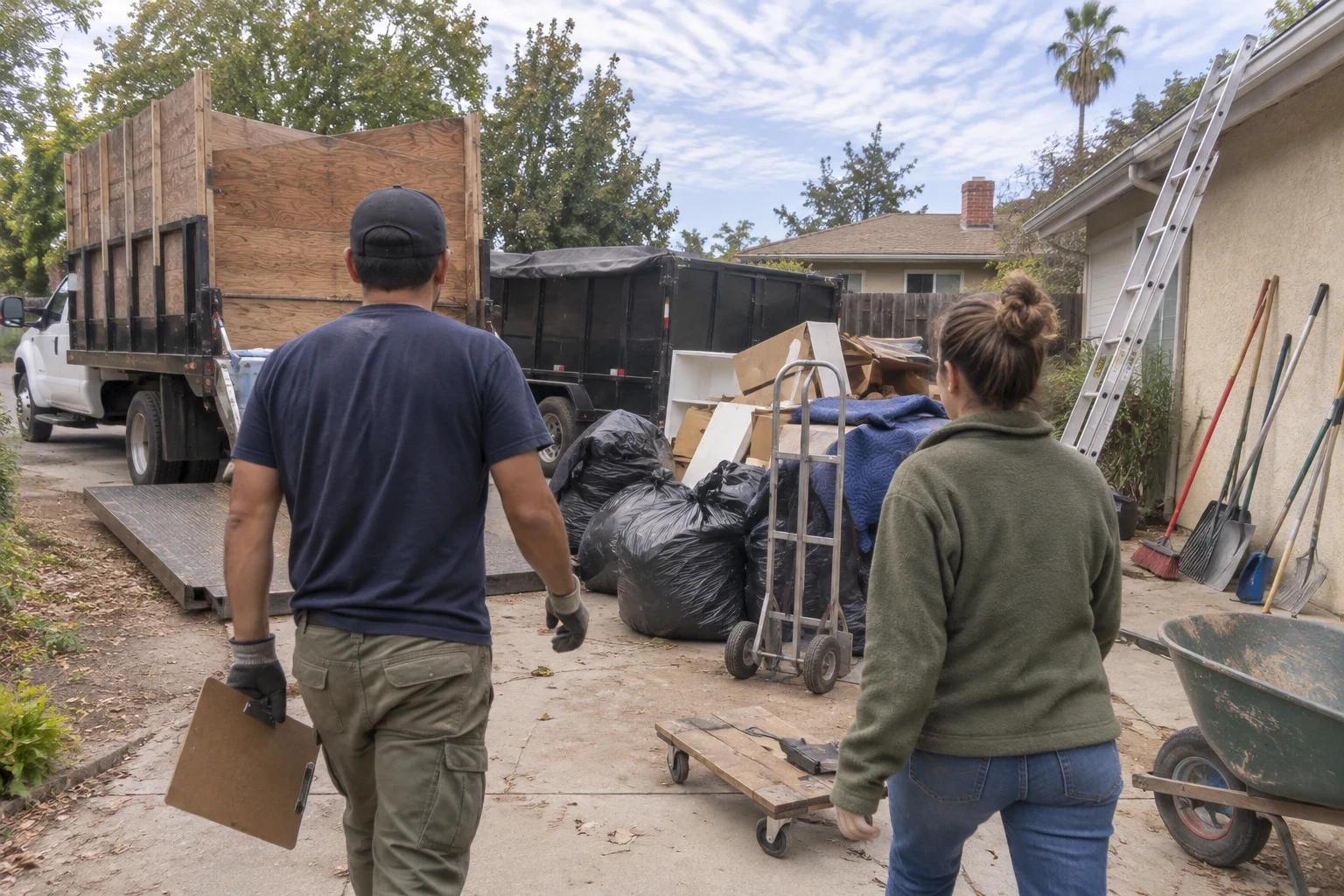
We arrive at the agreed time, protect the carry path and load in an order that keeps your driveway and walkways open. Recyclable material goes on separately.
- 4
Cleanup and walk-through
We sweep, check for nails and walk the area with you. You confirm that everything we agreed to take is gone before we leave.
What shapes the cost of debris removal
Construction debris is priced mainly on how much room it takes on the truck and how much it weighs at the disposal site. We explain each factor in your written quote so nothing is added after the fact. The estimate is free and carries no obligation.
- Volume
- We begin by gauging how much of the truck bed your load will occupy. A small bathroom tear-out might sit in one corner, while the remains of a full kitchen gut can take up most of the space.
- Weight and density
- Concrete, tile, brick and plaster weigh far more than lumber or carpet of the same size, and disposal sites charge by weight. A modest heap of rubble can cost more to dispose of than a larger pile of drywall.
- Access and carry distance
- Debris stacked near the street loads quickly. Material in a backyard, up stairs or down a narrow side path takes more time and care.
- Material mix
- Mixed loads may need sorting, and some items carry their own disposal fees. We list these up front rather than adding them later.
Questions about construction debris
Something not covered here? (530) 444-8496
Can you haul concrete and dirt?
Yes, broken concrete, brick and similar rubble are part of this service. Because they are so heavy, we usually ask to see them before pricing. Large amounts of soil are priced by weight and shown as a separate line.
Is there anything you will not take?
Some materials need a specialist rather than a hauler: liquid paint, solvents and fuels, and anything that may contain asbestos. In older homes that can include textured ceilings and some vinyl floor tiles. If we spot any of these during the visit, we point them out then, not on loading day.
Can you pick up in stages during a remodel?
Yes. Some customers prefer one pickup after demolition and another at the end. We can price each visit separately so you know what each one covers.
Will the price change once you start loading?
Not without your agreement. The written quote sets the scope and price. If more material appears than we saw, we show you, explain the difference and wait for your decision.
Do I need to be home?
It helps to be there at the start and for the final walk-through. If the debris is outside and clearly marked, we can settle the details by phone ahead of time.
Do you work outside the city?
We pick up debris across the surrounding area, including Davis, Woodland, Dixon and West Sacramento. Ask when you call and we will confirm.
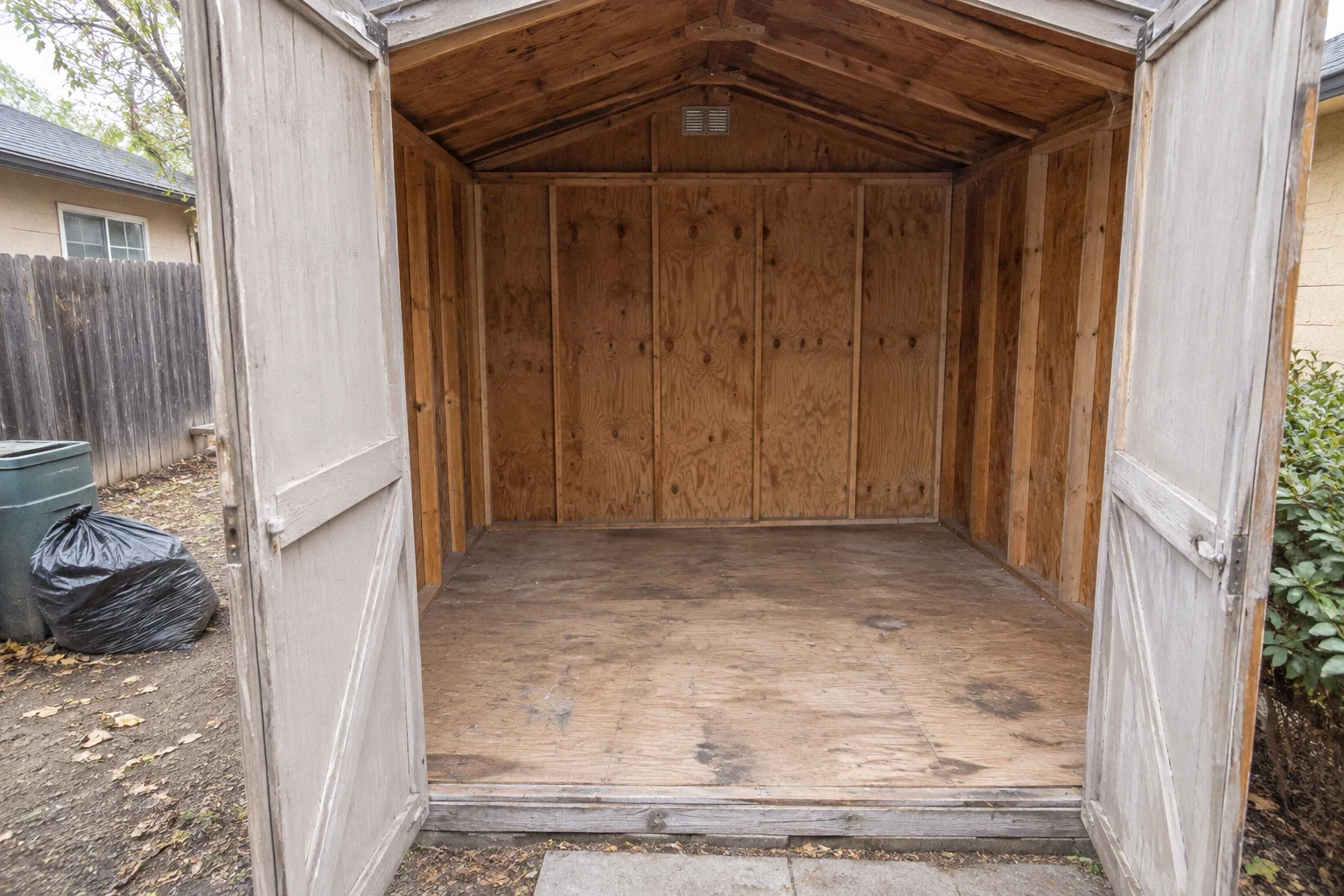
Get the leftovers off your property
Tell us what the project left behind and we will come look, then set the scope and price down on paper before anything is loaded. If the job also involves tearing something out, ask about light demolition on the same call.