ServicesShed Removal
Shed Removal in University of California-Davis
An old shed can sit in the yard for years after it stops being useful. We empty it, take it apart by hand and load every panel, screw and shingle onto our truck. You see the full scope in writing first: what comes down, what leaves and what stays.
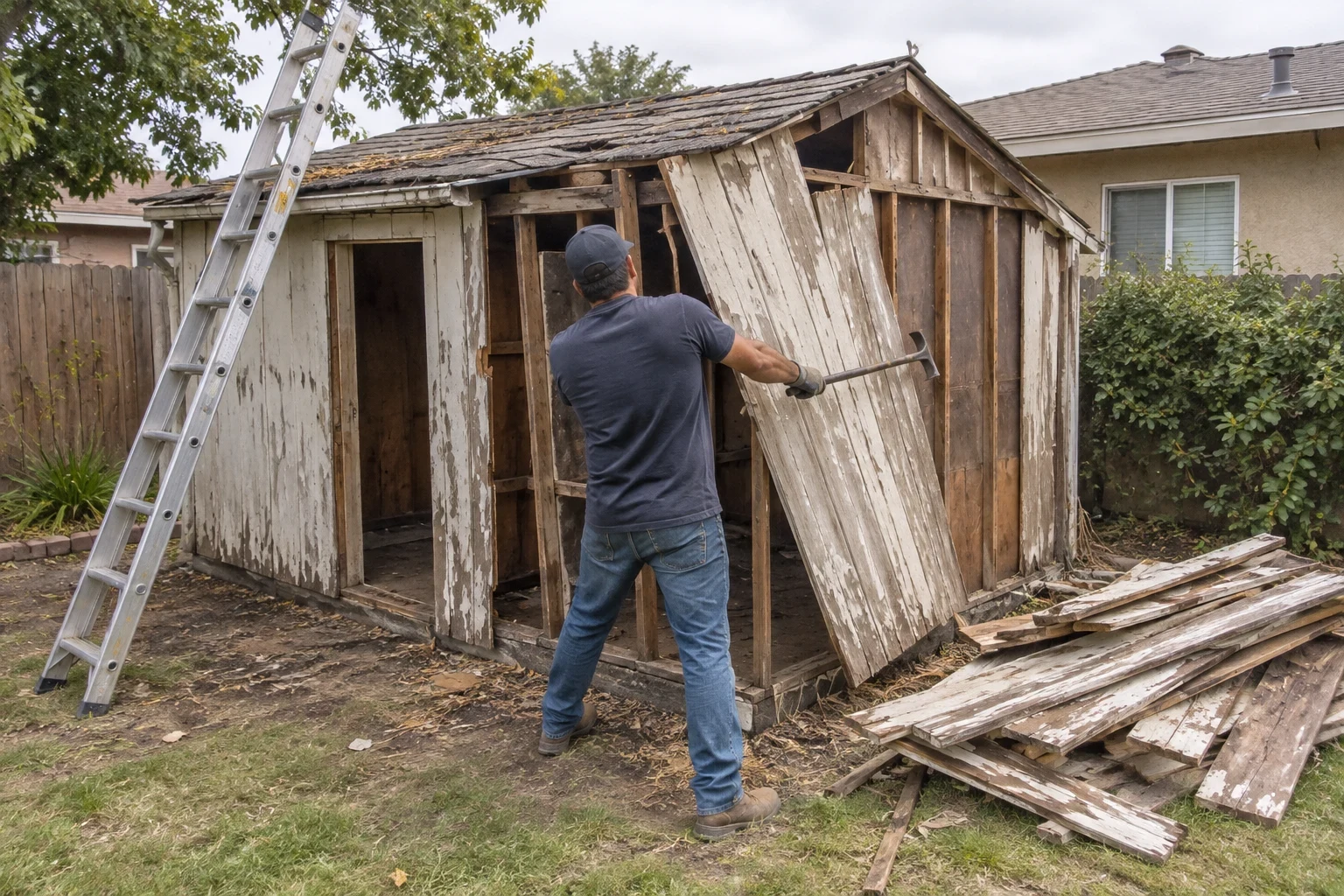
Knowing when a shed has had its day
By the time a shed reaches us, it has usually been failing slowly for a while. A wood floor goes soft, the doors stop closing, a metal roof starts to rust through at the seams, or a resin kit turns brittle after years of summer sun. Sometimes nothing is wrong at all and you simply want the space back for a garden, a patio or a new building.
Shed removal covers the whole job: emptying what is inside, taking the structure apart by hand, and hauling the materials off your property. We look at how the shed was built and what it sits on, then write down exactly what we will remove so there is no guessing on the day.
If the contents are the bigger project, our junk removal and garage cleanouts pages explain how we handle a full load of stored things. Many customers combine the two in one visit.
What our shed removal includes
Clearing the contents
Old tools, paint cans, bikes, lumber offcuts and boxes come out first. We set aside anything you want to keep and tell you up front if an item, such as leftover chemicals, needs separate handling.
Careful dismantling
We take the shed apart panel by panel rather than pulling it over. That keeps fences, trees and nearby plantings out of harm's way and lets us control where nails and broken glass land.
Roofing, siding and framing
Asphalt shingles, metal sheets, plywood, T1-11 siding and framing lumber are separated as we work. Wood and metal can often go to recycling rather than the landfill.
Floor and foundation
Wood floors on skids or pier blocks come out with the structure. Gravel pads and concrete slabs are discussed during the estimate, and the written quote states clearly whether they stay or go.
Haul-away and site cleanup
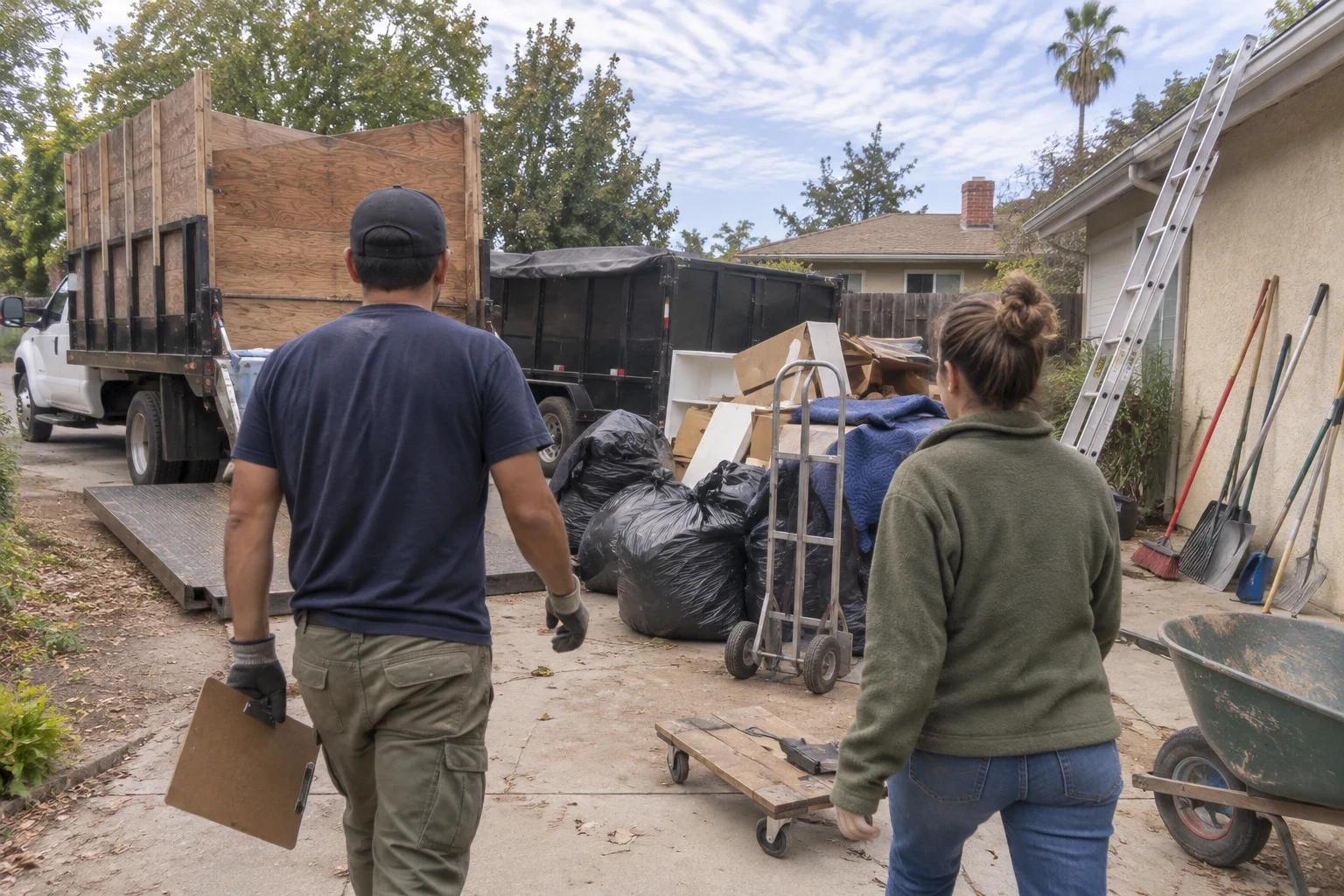
Every piece leaves on our truck. We rake the footprint, run a magnet over the ground for stray nails and screws, and leave the area ready for whatever comes next.
Signs your shed is ready to go
- Soft or sagging floor
- A spongy floor usually means rot in the joists or the skids underneath. Once moisture gets in through the long wet stretch of winter, it rarely stops on its own.
- Termite or dry rot damage
- Powdery wood, hollow-sounding studs or crumbling corners point to damage that spreads. Removing the shed takes away a food source close to your home.
- Rust holes and loose panels
- Metal sheds fail at the seams and the base rail. Sharp edges and loose sheets become a hazard, especially in wind.
- Cracked or warped resin
- Plastic kits fade, warp and split after years in strong sun. Doors drop out of their tracks and the roof stops shedding water.
- Leaks and pests inside
- Water stains on stored items or signs of rodents nesting mean the shed is no longer protecting what is in it.
- You want the space back
- A sound shed in the wrong place is reason enough. Clearing it opens the yard for a new structure, a garden bed or a patio.
How the work goes on the day
- 1
Estimate by phone, then a look
You call and describe the shed: rough size, material and what it sits on. We look at it, ask what you want kept, and note anything that changes the work, like wiring or a slab.
- 2
Your written quote
We put the scope in writing: the structure, the contents, the floor and what happens to the foundation. Pricing factors are listed so you can see what drives the number before you agree to anything.
- 3
Utilities checked first
If the shed has electrical service, it needs to be disconnected by an electrician before we start. We will point that out during the estimate so the day is not held up.
- 4
Teardown and loading
The crew empties the shed, removes the roof, then the walls, then the floor. Materials go straight onto the truck, sorted where recycling makes sense.
- 5
Final cleanup
We rake the footprint, sweep up small debris, pick up stray fasteners and walk the area with you before we leave.
What moves the cost of shed removal
No two sheds are built quite the same, so we price from what we see on your property rather than a flat guess. The factors below are the ones we name in your written quote. Once work begins, nothing is added unless you ask us to change the scope.
- Size and material
- A small resin kit comes apart in short order and weighs very little. A large framed wood shed under asphalt shingles needs more hours to dismantle and takes up more room on our truck.
- What is inside
- An empty shed is a different job from one packed with years of storage. Heavy items such as old mowers, bags of concrete or stacked lumber add volume and weight.
- The foundation
- Skids and pier blocks are routine. A gravel pad or a concrete slab changes the work considerably, and the quote spells out how it is handled.
- Access to the yard
- A shed near the driveway loads quickly. One set behind your home, reached only through a narrow gate or past planted beds, means each piece is carried out by hand, and that adds time.
Shed removal questions
- Should I clear out the shed myself first?
- That is up to you. We can empty it as part of the job and set aside anything you are keeping wherever you would like it. The written estimate notes whether contents are included, so you know what the visit covers.
- Can you remove a concrete slab under the shed?
- We talk about the slab during the estimate, because it is a separate piece of work from the shed itself. Your quote states plainly whether the slab stays or comes out, so there is no confusion afterward. If you plan a new shed on the same spot, keeping a sound slab is often the better choice.
- Will the work damage my lawn or fence?
- We dismantle by hand instead of pulling the shed down, which keeps falling material under control. We lay out a path for carrying pieces to the truck and protect nearby plantings where we can. Grass under the shed itself will usually be bare or yellow and need time to recover.
- What happens to the old materials?
- Clean wood and metal are separated so they can be recycled where possible. Shingles, rotted lumber and mixed debris go to the appropriate disposal site. You do not need to arrange anything yourself.
- Which areas do you serve for shed removal?
- We work in Davis and the surrounding area, including Woodland, Dixon, Winters, West Sacramento and Vacaville. The Service Areas page lists the full set of towns we cover.
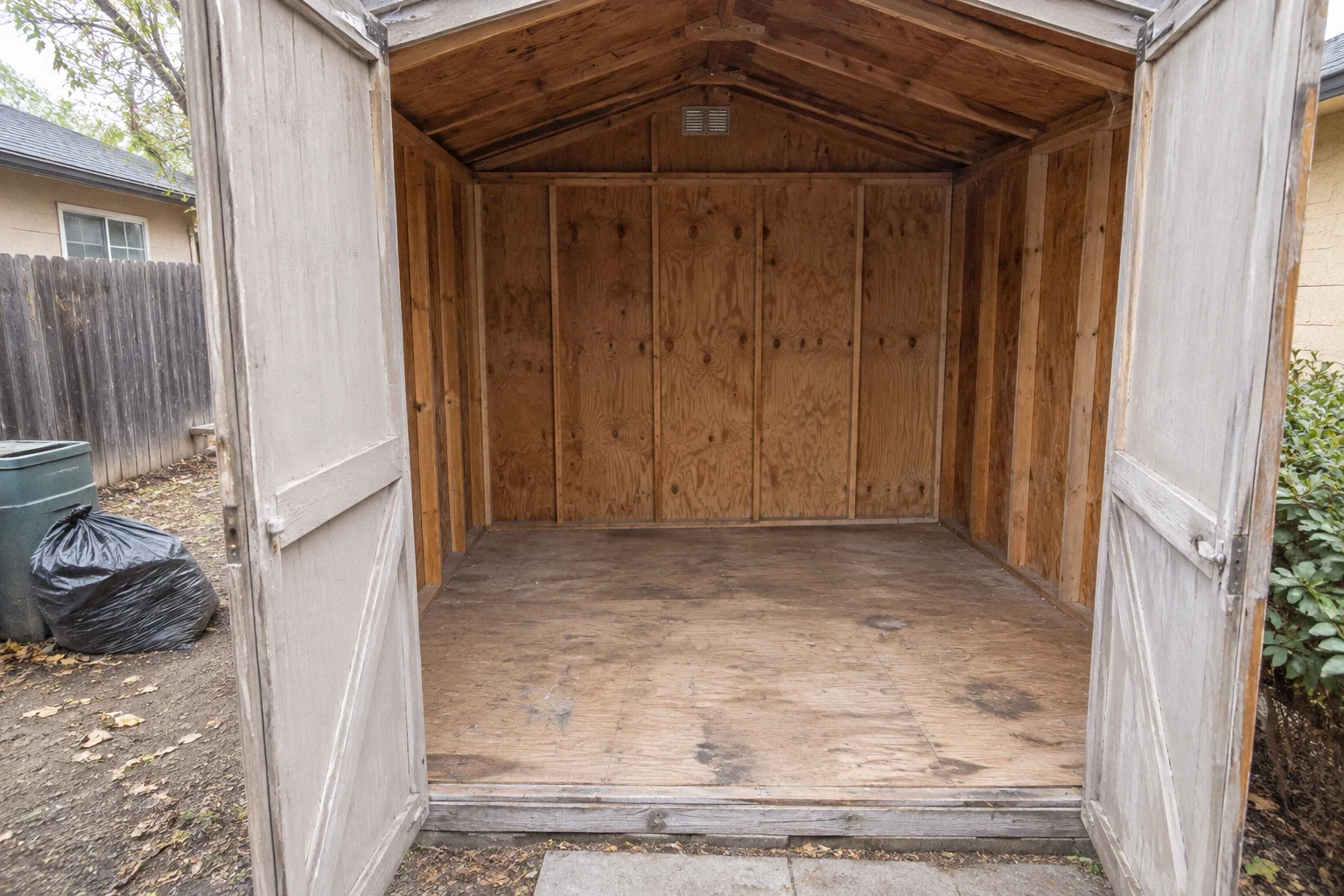
Let's talk about the shed you want gone
Describe your shed over the phone and we will set a time to come look at it. The estimate is free and carries no obligation, and you have the scope in writing before any work starts.